
| Editorial disclosureThis guide contains a contextual link to UAZ Agency Limited at the publisher’s request. Its listed service capabilities were checked against the agency’s public website. The article does not claim that the agency is US-based, the “best” provider, or guaranteed to produce rankings or revenue. |
How to Choose the Right SaaS SEO Agency in 2026
Updated August 5, 2026
| Quick answerA SaaS SEO agency helps subscription software companies attract qualified search demand and turn it into trials, signups, demo requests and sales pipeline. The strongest partner will understand the product, customer journey, technical website, content economics, authority building, conversion paths and revenue attribution—not merely publish blog posts or report rankings. |
SaaS companies compete in a market where buyers compare products, integrations, pricing, security, alternatives and use cases before they talk to sales. A general SEO playbook can create traffic, but traffic alone does not pay for a subscription business. The right SaaS SEO agency should connect search visibility with product adoption, qualified leads and recurring-revenue growth.
This guide explains what specialist agencies should deliver, how to evaluate pricing and case studies, which warning signs to avoid, and how SEO now fits alongside AI-powered search experiences. It is aligned with Google’s people-first content guidance and current recommendations for generative AI search visibility.
What Is a SaaS SEO Agency?
Software as a service, or SaaS, is software delivered online and commonly sold through monthly or annual subscriptions. Salesforce’s SaaS overview describes the model as customer access to cloud-hosted software rather than a one-time software purchase.
A SaaS SEO agency is a search-growth partner that specializes in the buying behavior, website architecture and business metrics of subscription software companies. Its work may include technical SEO, search-intent research, product-led content, digital PR, link acquisition, conversion optimization and analytics.
The critical difference is the destination of the traffic. A publisher may measure pageviews. An ecommerce store may measure transactions. A SaaS company often needs to track free trials, product signups, demo bookings, product-qualified leads, sales-qualified leads, assisted pipeline and revenue influence.
Why SaaS SEO Is Different From Traditional SEO
A software purchase can involve several users and decision-makers. A practitioner searches for a feature, a manager compares platforms, security reviews data handling, procurement checks terms, and an executive evaluates cost and risk. Each person may use a different query, and each query needs a page that answers the next question in the buying process.
| SaaS challenge | SEO implication |
|---|---|
| Longer buying journey | Build education, use-case, comparison, integration, security and commercial pages. |
| Multiple stakeholders | Address practitioner, manager, technical, security and executive concerns. |
| Recurring revenue model | Measure acquisition quality and pipeline—not traffic in isolation. |
| Product changes frequently | Maintain feature, pricing, integration and documentation accuracy. |
| Competitive category terms | Support content with credible expertise, differentiated assets and authority. |
| Free trial or demo conversion | Optimize every high-intent page for a clear next step. |
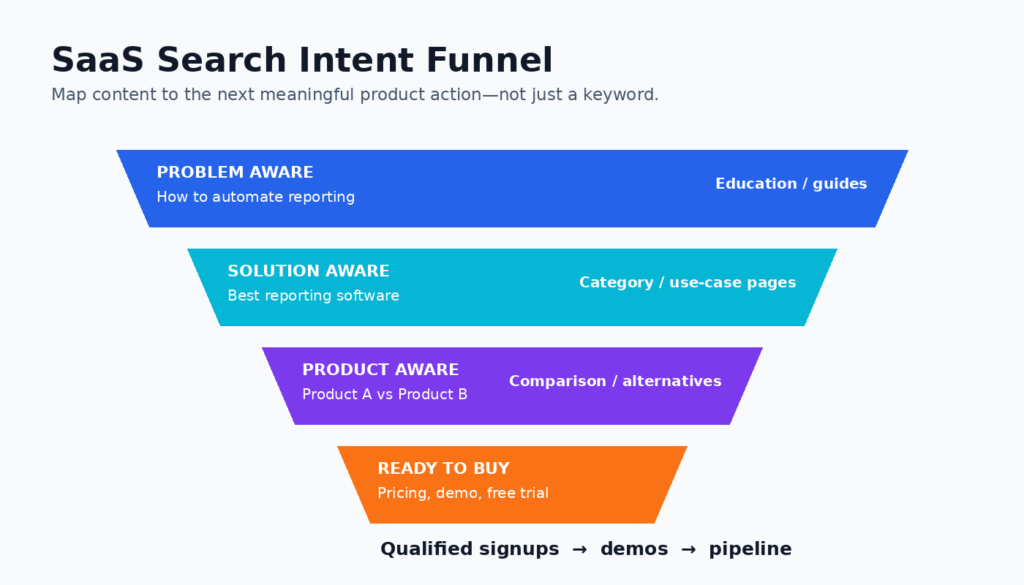
Figure 1. Search intent should move users toward the next useful product decision.
When Should a SaaS Company Hire an SEO Agency?
An agency is most useful when the opportunity is real but the internal team lacks time, specialist depth or production capacity. It can also help before a redesign, migration or category launch, when technical and information-architecture mistakes are expensive to reverse.
- The product has clear positioning and at least some evidence of customer demand.
- Prospects already search for the problem, category, integrations or competitors.
- The site has technical or content debt that internal teams cannot prioritize.
- The marketing team needs consistent content, digital PR or publisher outreach.
- The company can track signups, demos, pipeline or assisted conversions.
- Leadership understands that durable organic growth requires testing and iteration.
SEO is less likely to solve a product-market-fit problem. If users do not understand the product, retain poorly, or will not pay, more search traffic may only expose those weaknesses faster.
Core Services a SaaS SEO Agency Should Provide
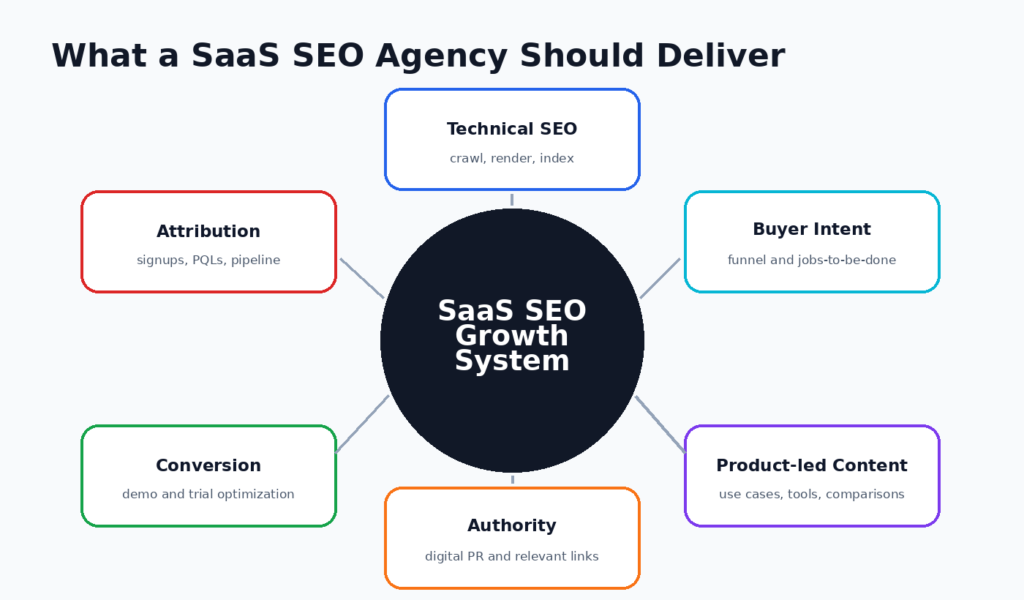
Figure 2. A specialist engagement combines discovery, content, authority, conversion and measurement.
1. Product and Customer Research
Before choosing keywords, the agency should learn how the software creates value. This requires product demos, customer interviews, sales-call insights, support questions, churn reasons, win-loss information and competitor research. A shallow agency starts with a keyword export. A strong agency starts with the buyer and the product.
The research should identify jobs to be done, recurring pain points, feature language, objections, switching triggers, target industries, buying roles and the events that lead a prospect to seek a solution.
2. Technical SEO and Website Architecture
SaaS websites often combine a public marketing site, documentation, a help center, templates, programmatic pages, free tools and an authenticated application. That creates crawling, rendering, duplication and canonicalization risks.
- Crawlability, indexation and XML sitemap review
- JavaScript rendering and internal-link accessibility
- Canonical tags, duplicate URLs and parameter handling
- Marketing-site and app separation
- International and multilingual architecture
- Core Web Vitals and mobile performance
- Redirects, migrations and discontinued feature pages
- Structured data that accurately matches visible content
Google’s SEO Starter Guide remains a useful baseline for crawlable links, understandable page structure and user-focused content.
3. Buyer-Intent Keyword and Topic Mapping
Keyword research should not produce one giant spreadsheet with no decision logic. The agency should map search demand to the customer journey and to page types the website can realistically support.
| Intent stage | Example query | Best page type | Primary action |
|---|---|---|---|
| Problem aware | How to reduce manual reporting | Guide or workflow article | Read related solution |
| Solution aware | Automated reporting software | Category or use-case page | View product fit |
| Product aware | Tool A vs Tool B | Comparison page | Start trial or book demo |
| Commercial | Reporting software pricing | Pricing or plan page | Choose plan or contact sales |
| Implementation | Connect software to Salesforce | Integration page or tutorial | Activate integration |
4. Product-Led Content
The best SaaS content helps a reader complete work while making the product’s value understandable. It does not hide the product until the final sentence. Useful formats include free tools, templates, calculators, integration guides, workflow tutorials, feature education, use-case pages, comparison pages and implementation resources.
Every page should have a defined audience, problem, proof standard and conversion path. Comparison content should be fair and specific. Alternative pages should explain who each option suits, not simply declare the publishing company the winner.
5. Authority Building, Guest Posting and Digital PR
Competitive software categories usually require more than on-page optimization. Relevant editorial mentions can help qualified audiences discover a product, strengthen brand credibility and support search visibility. The emphasis should be relevance, editorial value and transparency—not a target number of links at any cost.
SaaS teams that need publisher outreach, contextual placements and supporting content strategy can review the guest posting, link building, digital outreach, ranking support and SEO consultation services listed by UAZ Agency Limited. Buyers should independently verify fit, publisher quality, deliverables, pricing and prior results before committing to a campaign.
Google warns that irresponsible SEO can damage a site and advises buyers to ask for past work, measurement methods, industry experience and clear explanations. It also states that no SEO can guarantee a number-one ranking. See Google’s guide to hiring an SEO.
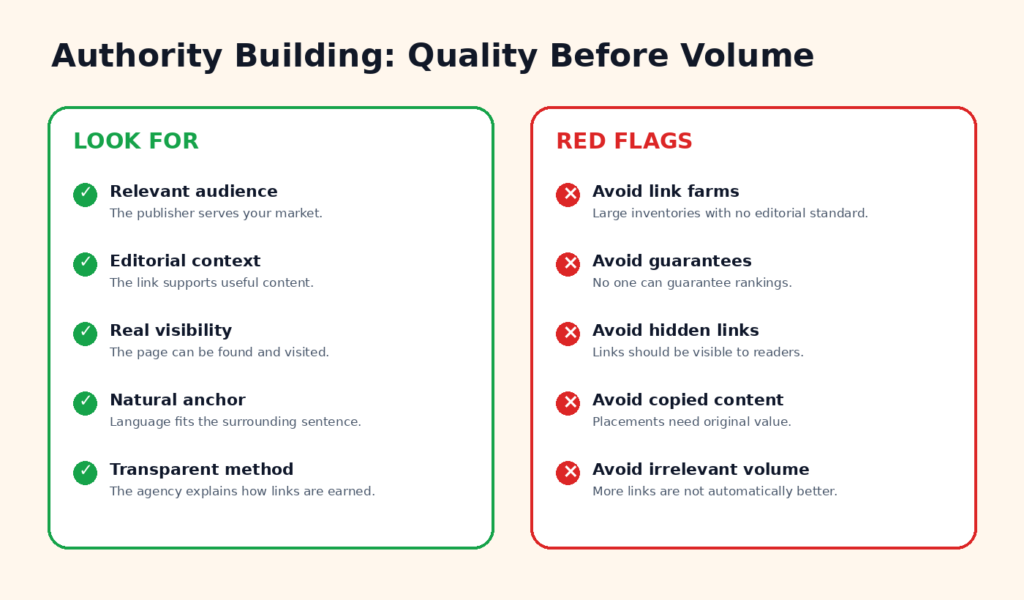
Figure 3. Evaluate authority work by relevance, editorial quality and transparency.
6. Conversion Optimization
Organic growth becomes commercially useful when the right visitors understand the offer and take an appropriate next step. The agency should review page messaging, proof, product screenshots, calls to action, pricing clarity, demo friction, signup flow and the relationship between informational and commercial pages.
Not every visitor should see “Book a demo.” An early-stage reader may need a template, calculator, newsletter, product tour or related use case. The next step should match the user’s level of awareness.
7. Reporting and Revenue Attribution
Rankings and traffic are diagnostic metrics. They show whether a strategy is gaining visibility, but they do not prove business value. A SaaS agency should connect search activity with meaningful actions and explain where attribution is incomplete.
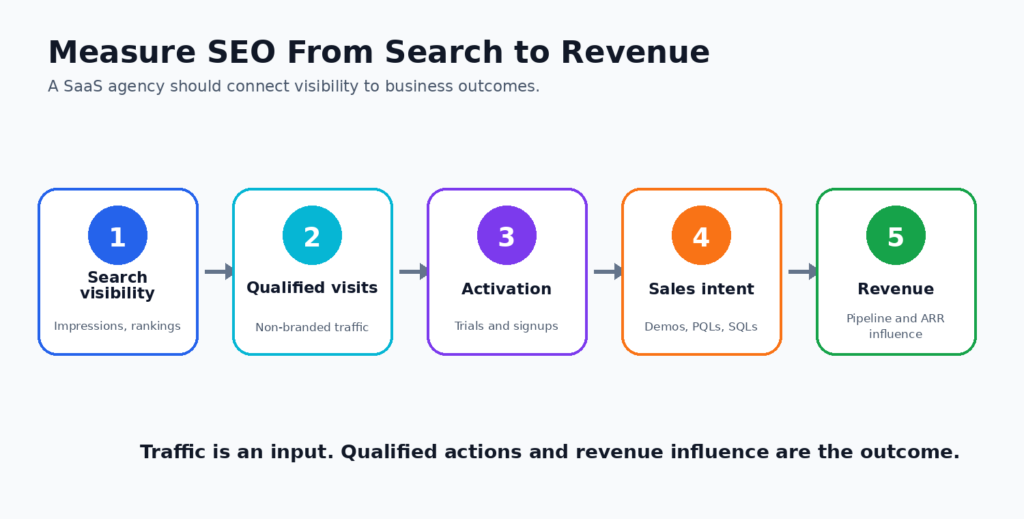
Figure 4. Reporting should connect search visibility to activation, sales intent and revenue influence.
| Metric group | Examples | What it answers |
|---|---|---|
| Visibility | Impressions, ranking distribution, share of search | Are more relevant buyers finding the brand? |
| Traffic quality | Non-branded visits, engagement, return visits | Is the audience relevant and interested? |
| Activation | Trials, registrations, product events | Are visitors experiencing product value? |
| Sales intent | Demos, PQLs, SQLs, opportunity creation | Is SEO influencing real demand? |
| Revenue | Pipeline value, assisted wins, ARR influence | Is the channel contributing economically? |
What a Strong SaaS SEO Strategy Looks Like
A credible strategy sequences work instead of attempting everything at once. The first phase should reduce uncertainty, fix critical technical issues and identify the pages closest to revenue. Content production and authority building then support validated opportunities.
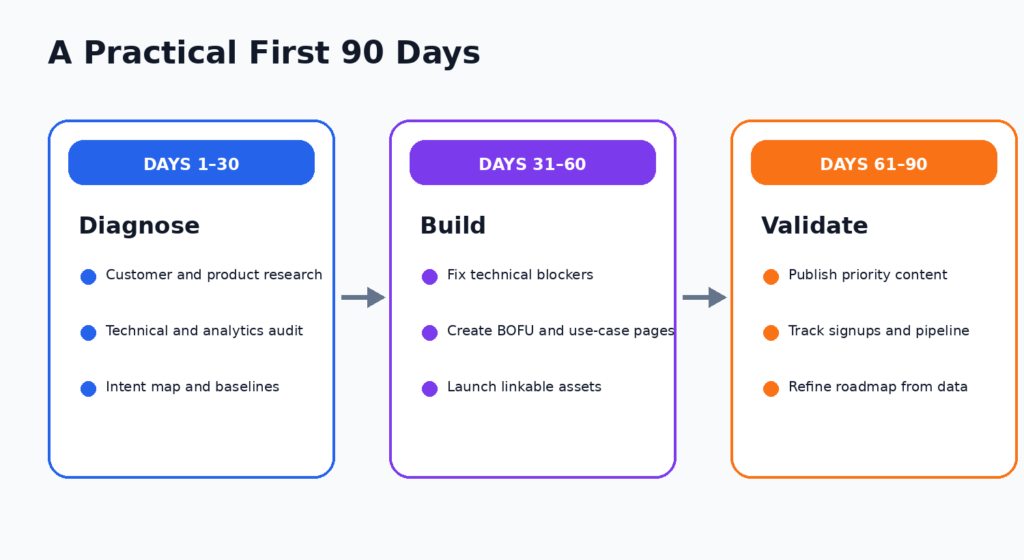
Figure 5. The first 90 days should move from diagnosis to implementation and validation.
Days 1–30: Diagnose
- Interview product, sales, customer-success and support teams.
- Audit analytics, Search Console, crawling, templates and conversions.
- Map the buyer journey, search intent and existing content gaps.
- Set a baseline for traffic quality, signups, demos and pipeline.
- Identify a short list of high-impact technical and commercial opportunities.
Days 31–60: Build
- Fix issues that block crawling, indexing, performance or conversion.
- Improve high-intent product, integration, use-case and comparison pages.
- Create expert-led briefs for differentiated content.
- Develop a linkable asset, free tool, dataset or original point of view.
- Build an outreach list based on topical relevance and real readership.
Days 61–90: Validate
- Publish, distribute and internally link priority content.
- Measure rankings and traffic together with signup and pipeline indicators.
- Review sales feedback and user behavior on commercial pages.
- Refine the roadmap based on observed performance, not assumptions.
- Document what worked, what failed and what should be scaled next.
How to Evaluate a SaaS SEO Agency
Do not evaluate agencies only by their own rankings, website design or number of promised deliverables. Use a transparent scorecard and require evidence for every important claim.
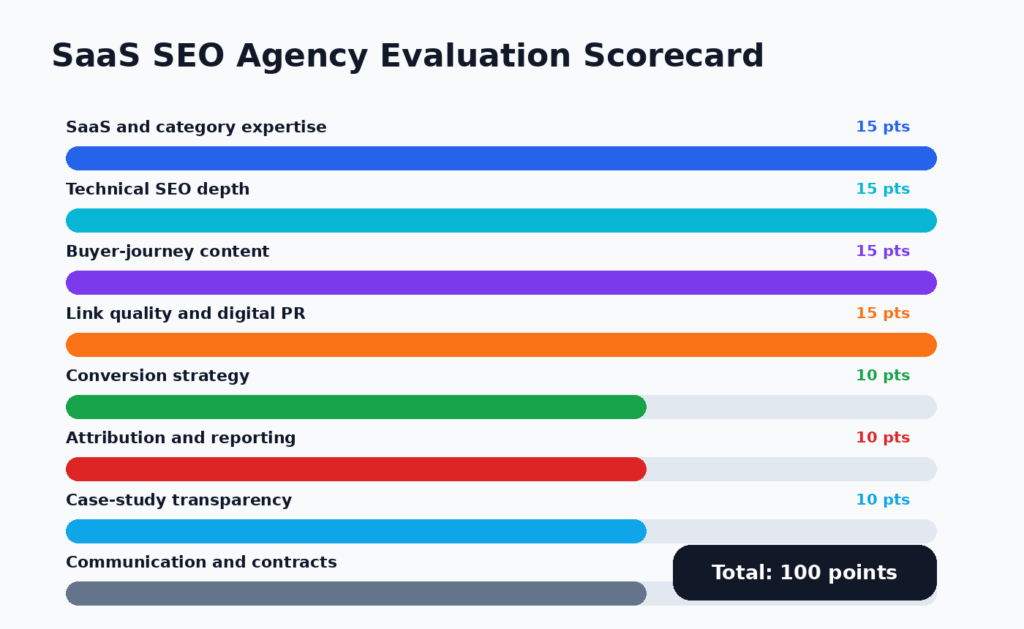
Figure 6. Use a weighted scorecard instead of selecting an agency from a sales call alone.
SaaS and Category Experience
Ask the agency to explain a SaaS buyer journey, the role of free trials or demos, and how it would choose between a blog post, feature page, integration page, free tool and comparison page. Relevant thinking matters more than using the word “SaaS” in marketing copy.
Case-Study Transparency
A case study should name the starting situation, work completed, timeframe, constraints and business result. Traffic charts without dates, query context or conversion data are weak evidence. Anonymous case studies may be legitimate, but the agency should still explain its method and provide references when possible.
Communication and Ownership
Clarify who performs strategy, technical work, writing, editing and outreach. Some agencies outsource responsibly; the concern is not outsourcing itself but hidden ownership, inconsistent quality and lack of review.
Measurement Discipline
The agency should be able to distinguish correlation from causation and explain attribution limits. It should also separate branded growth from non-branded discovery and identify which landing pages influence trials, demos and pipeline.
SaaS SEO Pricing and Contract Models
There is no reliable single price for SaaS SEO because scope, competition, technical complexity, content volume, geography and authority requirements differ. A proposal should make the operating model easy to understand.
| Model | Best for | Main risk |
|---|---|---|
| One-time audit | Teams with internal execution capacity | Recommendations may remain unimplemented. |
| Strategy project | A defined launch, migration or category plan | Limited iteration after delivery. |
| Monthly retainer | Ongoing technical, content and authority work | Vague retainers can hide low output. |
| Production package | Predictable content or outreach volume | Volume can replace strategy. |
| Hybrid engagement | Shared work between agency and internal team | Ownership must be documented clearly. |
A strong proposal specifies deliverables, assumptions, dependencies, approval steps, reporting, access requirements, intellectual-property ownership, link replacement rules, termination terms and what is explicitly out of scope.
Agency vs In-House SaaS SEO
| Consideration | Agency | In-house |
|---|---|---|
| Speed to specialist capability | Usually faster access to multiple disciplines | Hiring and onboarding take time |
| Product knowledge | Must be learned through discovery | Builds deeply over time |
| Execution capacity | Can scale production and outreach | Depends on headcount and priorities |
| Control and communication | Requires clear workflows | Closer to product and leadership |
| Cost structure | Flexible scope but recurring fees | Salary, benefits, tools and management |
| Best fit | Gaps in expertise or execution capacity | Long-term core capability and ownership |
Many SaaS companies use a hybrid model: an internal owner controls product context and priorities, while an agency supplies specialist technical, content, design, digital PR or outreach capacity.
Red Flags to Avoid
- Guaranteed first-place rankings, guaranteed AI citations or a “special relationship” with Google.
- A strategy built entirely around publishing large quantities of generic AI-written articles.
- No questions about the product, customer, sales motion or conversion model.
- Case studies that show only traffic and hide timeframe, brand demand or conversions.
- Hundreds of links from unrelated sites, recycled publisher lists or hidden networks.
- Refusal to explain methods, link sources, ownership or reporting.
- Long contracts with unclear deliverables, acceptance criteria or termination terms.
- Recommendations based solely on third-party tool scores without manual validation.
- Using the same template for every SaaS company regardless of category and maturity.
Google’s spam policies cover deceptive practices, hidden links and scaled content abuse. Buyers remain responsible for work performed on their sites, so methods should be understood before implementation.
SaaS SEO in the Age of AI Search
AI Overviews and other generative search experiences have changed how users explore complex questions, but they have not removed the need for crawlable, useful and differentiated web content. Google’s current guidance frames AEO and GEO work as part of SEO rather than a replacement for it.
The most defensible approach is to publish content that cannot be produced by summarizing competitors: original research, first-hand tests, product data, expert analysis, customer evidence, tools and clear points of view. Google’s AI optimization guide advises creating valuable non-commodity content, maintaining a clear technical structure and avoiding inauthentic mentions or gimmicks.
- Make important content publicly crawlable and understandable.
- Use accurate authorship, review dates and source attribution.
- Add original images, demonstrations and video where useful.
- Keep pricing, features, integrations and security information current.
- Monitor traditional search and AI-feature visibility in Search Console.
- Avoid creating separate low-value pages for every possible query variation.
What SaaS Founders Say About Hiring SEO Agencies
Founder discussions on Reddit’s r/SaaS community repeatedly raise concerns about agencies producing surface-level content without understanding the product. Contributors commonly recommend asking how the agency researches the market and connects results with users or ROI rather than rankings alone. These comments are anecdotal, but they are useful for building a buyer’s question list.
Another recent r/SaaS discussion about SEO results reflects the common trade-off between slower organic growth and faster channels such as paid advertising or outbound. The practical lesson is not that one channel always wins; it is that expectations, measurement windows and channel roles should be explicit.
For workflow research, video case studies can help teams see how agencies and SaaS companies structure free tools, content hubs and link acquisition. For example, Ahrefs’ SaaS SEO case study video examines a software company’s use of free tools, content and backlinks. Treat promotional growth claims as leads for investigation, not as automatically verified evidence.
How Long Does SaaS SEO Take?
There is no guaranteed timeline. Technical fixes can be discovered quickly, but crawling, indexing, ranking, content distribution, brand recognition and conversion learning happen at different speeds. Competitive categories and new domains generally require more evidence and iteration than established brands with strong demand.
Google notes that improvements can take from days to several months to be reflected as systems learn whether a site consistently provides helpful content. See its core updates guidance.
| Time window | Reasonable focus |
|---|---|
| First 30 days | Research, analytics, audit, technical priorities and intent mapping |
| 30–90 days | Implementation, priority pages, content distribution and early leading indicators |
| 3–6 months | Broader query coverage, page learning, link acquisition and conversion refinement |
| 6–12+ months | Compounding content, authority, brand demand and pipeline influence |
These are planning windows, not ranking promises. A responsible agency should update forecasts as real data becomes available.
Questions to Ask Before Signing a Contract
- Which SaaS categories and go-to-market models have you worked with?
- How will you learn our product, customers, sales process and retention drivers?
- Which pages are closest to revenue, and how will you prioritize them?
- How do you separate informational traffic from commercial intent?
- What technical access do you need, and who approves changes?
- Who writes and reviews content? How is subject-matter expertise added?
- How do you source, review and report backlinks or digital PR placements?
- Which metrics will you report beyond rankings and total traffic?
- How will you connect SEO with signups, demos, PQLs, SQLs or pipeline?
- Can you show relevant work, references and the limitations of those examples?
- What is included in the fee, and what requires an additional budget?
- Who owns content, creative assets, analytics setups and outreach relationships?
- What happens if a placement disappears or a page is deindexed?
- What are the contract length, cancellation terms and handoff process?
- How do you use generative AI, and what human review is required?
- Which Google guidelines support your recommendations?
Final Verdict
A good SaaS SEO agency is not a content factory or a backlink vendor with a new label. It is a growth partner that understands the product, translates buyer questions into useful pages, keeps the site technically accessible, builds authority responsibly, improves conversion paths and measures business outcomes honestly.
For US SaaS companies, the best selection process combines evidence, transparency and fit. Review the agency’s methods, speak with references, start with a clearly scoped engagement, retain access to your data, and require reporting that connects visibility with real customer actions. The right partner cannot guarantee rankings, but it can create a disciplined system for discovering, earning and converting search demand.
Frequently Asked Questions
What does a SaaS SEO agency do?
It researches the product and buyer journey, improves technical accessibility, creates search-driven product and educational content, develops authority, optimizes conversion paths and reports how organic search influences signups, demos and pipeline.
How is SaaS SEO different from traditional SEO?
SaaS SEO must account for subscription economics, multiple stakeholders, longer consideration cycles, free trials or demos, integrations, product changes and recurring-revenue metrics.
How much does a SaaS SEO agency cost?
There is no single dependable price. Cost depends on technical complexity, competition, content and design needs, outreach requirements, geography and whether the engagement is an audit, project, retainer or hybrid model.
How long does SaaS SEO take to work?
Technical improvements may be implemented quickly, while meaningful organic visibility and pipeline influence often require months of consistent work. No responsible agency can guarantee an exact ranking date.
Should a startup hire an agency or build an in-house team?
An agency can provide faster specialist capacity. An in-house employee develops deeper product knowledge and ownership. A hybrid model often works well when an internal growth owner manages an agency’s specialist execution.
What metrics should a SaaS SEO agency report?
At minimum: non-branded visibility, qualified organic traffic, priority-page performance, trials or registrations, demo requests, PQLs, SQLs, assisted pipeline and a clear explanation of attribution limitations.
Is link building still important for SaaS?
Relevant editorial mentions and links can support discovery, trust and competitive visibility. Quality, audience relevance and editorial context matter more than volume.
Can an agency guarantee rankings in Google or AI answers?
No. Google explicitly warns against ranking guarantees, and generative search visibility is also not guaranteed. Agencies can improve eligibility, usefulness and authority, but they cannot control search systems.
How can I verify a SaaS SEO case study?
Ask for the starting point, exact work, dates, branded versus non-branded growth, conversions, client reference and known limitations. Screenshots without context are not enough.
What is the biggest warning sign?
An agency that proposes large-scale content or link production before understanding the product, customer and measurement model is a major risk.