
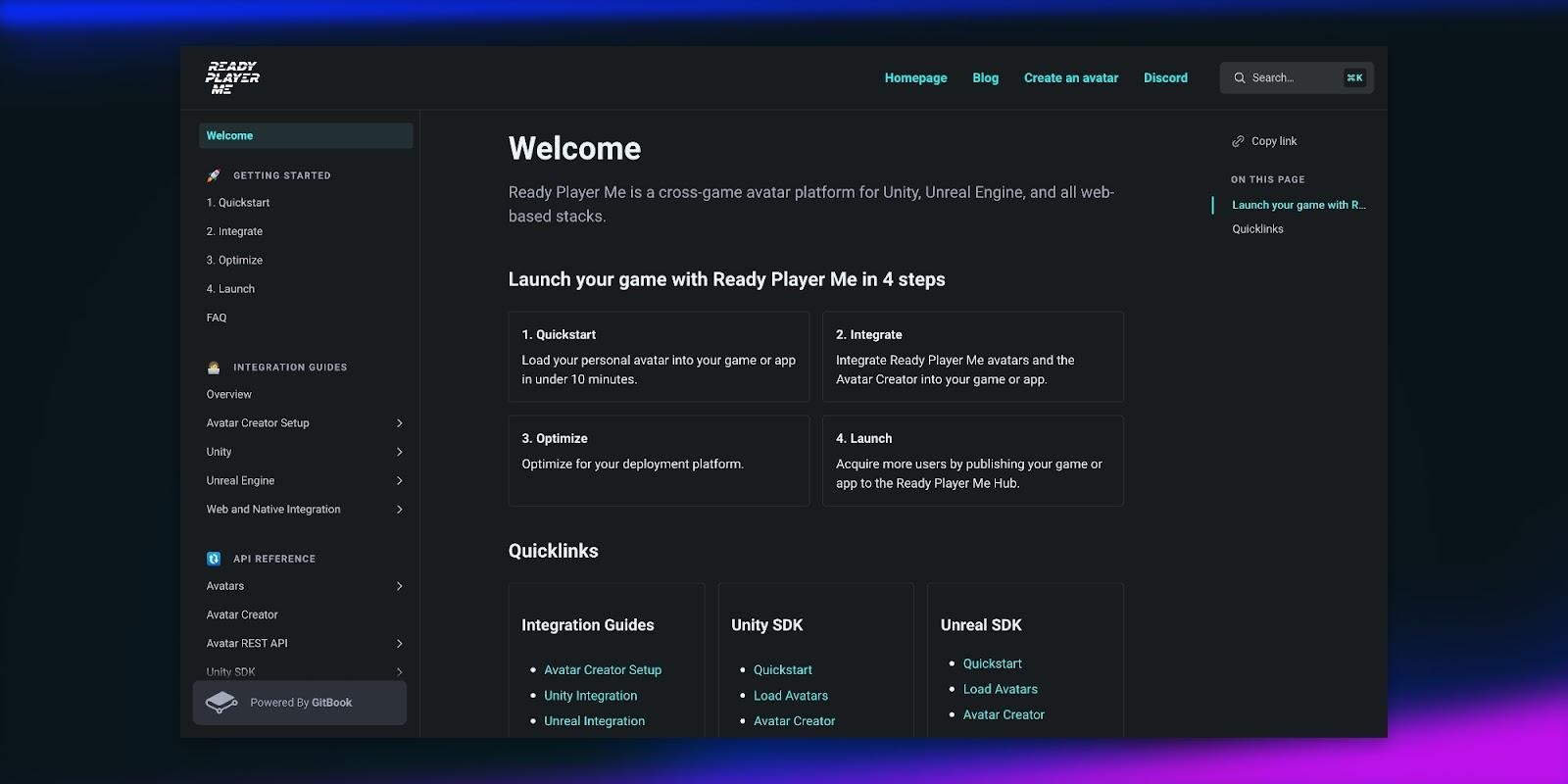
| Quick answerWolf3D was an Estonian 3D-avatar technology company that evolved into Ready Player Me. Its software focused on creating customizable, game-ready avatars from a selfie or preset and delivering them to Unity, Unreal Engine, web and other applications. Ready Player Me was acquired by Netflix in December 2025, and its public services were wound down on January 31, 2026. This article explains the software historically and what that means for people searching for it today. |
What Is Wolf 3D Software?
If you search for “wolf 3d software” today, the phrase can be confusing. It may look like the name of a downloadable 3D modeling program, but the best-known software company using the Wolf3D name was focused on digital avatars rather than general-purpose modeling.
Wolf3D began with 3D scanning technology and later built tools that could turn a person into a stylized digital character. The company eventually centered its work around Ready Player Me, a cross-app avatar platform designed for games, virtual worlds, VR/AR experiences and web products.
This guide is about that Wolf3D avatar software. It is not about Wolfenstein 3D, and it is not about older automotive ECU products that also used the Wolf 3D name.
| Topic | Details |
|---|---|
| Company/technology | Wolf3D, later Ready Player Me |
| Main purpose | Create and integrate personal 3D avatars |
| Avatar creation | Selfie-based or preset-based customization |
| Developer targets | Unity, Unreal Engine, web, mobile and VR/AR stacks |
| Typical model format | GLB / glTF-based 3D avatars |
| Current status | Ready Player Me acquired by Netflix; public service wound down in Jan. 2026 |
| Best use of this guide | Understanding the historical platform and its technology |
From Wolf3D to Ready Player Me
The story of Wolf3D is more useful than treating it as a single piece of software. The company started in Estonia with 3D scanning and avatar technology, then moved toward a scalable software platform that could create avatars without a full professional scanning booth.
The important shift was the move from hardware-heavy scanning to software that could create a personal avatar from a photo. That made the technology much easier to use inside games and digital experiences. Ready Player Me became the company’s main product and, over time, the brand name people recognized more than Wolf3D itself.
The goal was simple: a user creates a digital identity once, customizes it, and then developers can bring that avatar into compatible experiences instead of building an avatar system from scratch for every project.
Why the Wolf3D name still appears in searches
Older research papers, developer posts, forum discussions and technical references still use the Wolf3D name. That is why “wolf 3d software” can continue to appear as a search query even though Ready Player Me became the better-known product brand.
For SEO and research purposes, the most useful interpretation is therefore historical: Wolf3D was the company and avatar technology that led into Ready Player Me, rather than a current standalone 3D design application.
For a technical overview of the platform, the official Ready Player Me documentation explains how avatars, the Avatar Creator, APIs and developer integrations were designed to work together.
How Wolf3D / Ready Player Me Software Worked
The platform tried to remove much of the manual work normally involved in building a rigged 3D character. A developer could integrate an avatar creator, while the end user could make a character without opening professional software such as Blender or Maya.
1. Start with a selfie or preset
Users could begin with a selfie so the system could produce a stylized character inspired by their appearance, or they could start from a preset. The result was not meant to be a photorealistic digital double; it was a game-friendly avatar that could be customized.
2. Customize the character
The avatar creator offered options such as hairstyle, clothing, accessories and appearance settings. This was important because a good avatar system needs more than face generation: users also want control over how their identity looks in a game or virtual environment.
3. Generate a game-ready 3D model
The finished avatar could be delivered as a rigged, skinned 3D model. Ready Player Me documentation described GLB as the standard delivery format for its avatars. GLB is a compact binary version of glTF that can carry meshes, materials, skeleton data and other 3D information in one file.
4. Load the avatar into an app or game
Developers could use SDKs, APIs, an embedded web avatar creator or direct model URLs. This made the platform relevant to Unity, Unreal Engine, web projects and other environments that could work with web APIs and 3D assets.
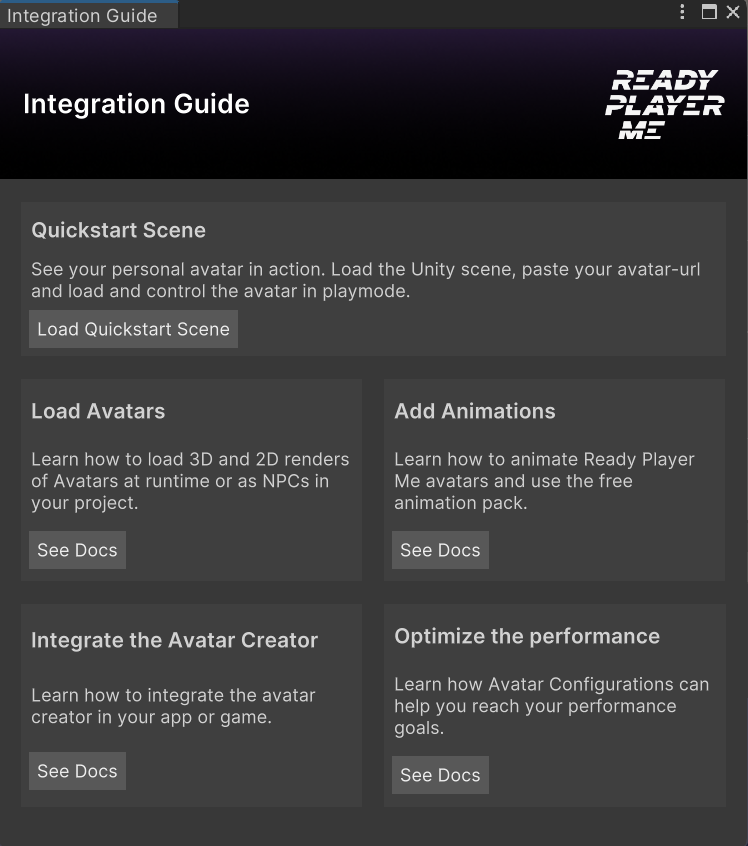
Ready Player Me Unity integration guide interface showing its developer-focused workflow.
Key Features of Wolf 3D Avatar Software
Selfie-to-avatar creation: A photo could be used as a starting point for a stylized personal avatar, lowering the barrier for non-3D artists.
Full-body and half-body characters: The platform supported different avatar types for conventional games and VR-style experiences.
Rigged and skinned models: Avatars were prepared for animation rather than being delivered as static 3D meshes.
Cross-platform integration: The system was built for web, desktop, mobile and game-engine workflows instead of one closed application.
Customization assets: Developers and users could work with clothing, hairstyles and other cosmetic items.
API and SDK workflow: Developers could integrate avatar creation and model delivery into their own products.
2D renders from 3D avatars: The system could also generate rendered avatar images for profile pictures and related UI use.
What Made the Software Useful for Developers?
The strongest part of the Wolf3D/Ready Player Me idea was not simply making a 3D character. Many tools can create a model. The bigger challenge is turning that model into something developers can reliably load, animate, customize and reuse inside a live product.
By providing a standardized avatar pipeline, the platform reduced the need for every small studio to build its own character creator, asset system and delivery service. That could save development time, especially for social games, virtual events, VR applications and apps where personalized identity mattered more than highly detailed character sculpting.
| Developer need | How the platform addressed it |
|---|---|
| Fast avatar creation | Web-based creator and selfie/preset starting points |
| Game-engine support | SDKs and integration guidance for Unity and Unreal |
| Web integration | APIs, iframe/web flows and model URLs |
| Animation-ready characters | Rigged and skinned avatar models |
| Performance control | Avatar configuration and optimization options |
| Cosmetic customization | Outfits, hairstyles and other assets |
Was Wolf 3D a Traditional 3D Modeling Program?
No. This is an important distinction for anyone comparing software.
Wolf3D/Ready Player Me was closer to an avatar platform and developer service than to a full 3D creation suite. A traditional package such as Blender, Maya or 3ds Max gives artists deep control over modeling, sculpting, UV work, materials, rigging and animation. Wolf3D focused on quickly producing standardized personal avatars and getting them into applications.
| Search-intent noteIf your goal is to build detailed 3D environments, sculpt original characters from scratch, create VFX or do advanced animation, “wolf 3d software” is not the right category of tool. Its historical strength was avatar generation and integration. |
Wolf3D Software vs Traditional 3D Tools
| Area | Wolf3D / Ready Player Me | Traditional 3D software |
|---|---|---|
| Main purpose | Personal avatar creation and integration | General 3D modeling, animation and rendering |
| Skill level | Designed to be easy for end users | Often requires 3D-art skills |
| Starting point | Selfie or preset avatar | Meshes, primitives, scans or manual modeling |
| Output | Standardized avatar assets | Broad range of custom 3D assets |
| Developer integration | Core part of the platform | Usually requires a separate pipeline |
| Creative control | Structured customization | Much deeper manual control |
What Happened to Wolf3D and Ready Player Me?
The biggest current-status update is that Ready Player Me is no longer operating as the same independent public avatar platform people used in earlier years.
Netflix acquired Ready Player Me in December 2025 as part of its gaming strategy. The deal focused on cross-game avatar technology and the idea of letting players carry identity and fandom across different games. Following the acquisition, the company announced that its existing public services would wind down on January 31, 2026.
A TechCrunch report on the Netflix acquisition documented both the acquisition and the shutdown date for Ready Player Me’s existing services.
| Important in 2026People searching for a Wolf3D download or a new Ready Player Me account should not assume old tutorials still describe an active public service. Some documentation and historical pages may remain visible, but the standalone service was wound down after the Netflix acquisition. |
Can You Still Download Wolf 3D Software?
There is no current, general-purpose “Wolf 3D Software” desktop installer that replaces the old Ready Player Me platform. Older articles may refer to SDKs, demos, APIs or avatar creators that were available while the independent platform was active.
If you find an old tutorial, check its date before following it. Developer endpoints, account systems, SDK packages and web-based avatar creators can change or disappear after a service is shut down. Avoid downloading unofficial packages that claim to be the original Wolf3D tool unless you can verify their source and licensing.
Who Used Wolf3D / Ready Player Me?
The platform was most relevant to developers and end users who needed a quick personal avatar rather than a full manual character-production pipeline.
- Game developers adding customizable player characters.
- VR and AR developers who needed avatar bodies for social experiences.
- Web developers embedding avatar creation into interactive products.
- Virtual-event and social-platform teams.
- Users who wanted a recognizable digital character without learning 3D modeling.
Advantages of the Wolf3D Approach
- Fast onboarding for users who had no 3D-art experience.
- A consistent avatar pipeline for developers.
- Game-ready output rather than static character images.
- Support for modern web and game-engine workflows.
- Personalization through clothing, hair and accessories.
- A practical bridge between consumer avatar creation and developer integration.
Limitations to Keep in Mind
- It was not a replacement for a professional modeling package.
- Avatar style and topology were standardized, so artists had less control than with fully custom characters.
- Cloud-based workflows depend on the service remaining available.
- Old integrations can become obsolete when APIs or accounts are retired.
- Current availability matters more than old feature lists because the public service was wound down in 2026.
Is Wolf 3D Software Still Worth Learning About?
Yes, especially if you are researching avatar technology, game development or the evolution of digital identity systems.
Wolf3D is a useful case study in how 3D-avatar technology moved from specialized scanning hardware toward easy selfie-based creation and developer APIs. Ready Player Me also showed why interoperability became an important idea: developers wanted avatars that could move between experiences instead of being trapped inside a single game.
In 2026, however, it is better to study Wolf3D as a historical platform and technology lineage than as an active software product you can simply sign up for and deploy today.
Frequently Asked Questions
What is Wolf 3D software?
Wolf3D was an avatar-technology company that developed tools for creating personal 3D characters. Its work evolved into the Ready Player Me avatar platform.
Is Wolf3D the same as Ready Player Me?
Not exactly. Wolf3D was the company/brand behind the technology, while Ready Player Me became its main avatar platform and later the company name people recognized.
Is Wolf 3D software the same as Wolfenstein 3D?
No. Wolfenstein 3D is the classic first-person shooter from id Software. The Wolf3D covered in this article was an avatar-technology company.
Could Wolf3D create an avatar from a photo?
Yes. Selfie-based avatar creation was one of the platform’s best-known capabilities.
What file format did Ready Player Me use?
Its documentation described GLB as the standard 3D avatar delivery format.
Did it work with Unity and Unreal Engine?
Yes. Ready Player Me offered developer workflows and SDK/integration guidance for Unity and Unreal Engine, along with web and API options.
Is Ready Player Me still available in 2026?
The independent public service was wound down on January 31, 2026 after Netflix acquired the company in December 2025.
Can I still follow old Wolf3D tutorials?
They can be useful for learning, but do not assume the APIs, accounts or hosted tools shown in older tutorials are still operational.
Final Verdict
Wolf 3D software is best understood as part of the history of modern avatar platforms. Wolf3D moved from 3D scanning toward software that made personal avatars easier to create and integrate, and that work ultimately became Ready Player Me.
The platform’s value came from combining user-friendly avatar creation with developer-ready models, SDKs and APIs. It was not a traditional modeling application; it was a system for turning personal identity into standardized game-ready characters.
For anyone researching the keyword in 2026, the most important update is the current status: Ready Player Me was acquired by Netflix and its public service was wound down. That makes old feature guides useful for context, but not a guarantee of what can still be downloaded or used today.
Research note
This article was written from scratch using current web research, historical Ready Player Me documentation, reporting on the Netflix acquisition, older developer materials and avatar-technology references. Only two external research backlinks were inserted in the article, as requested.