
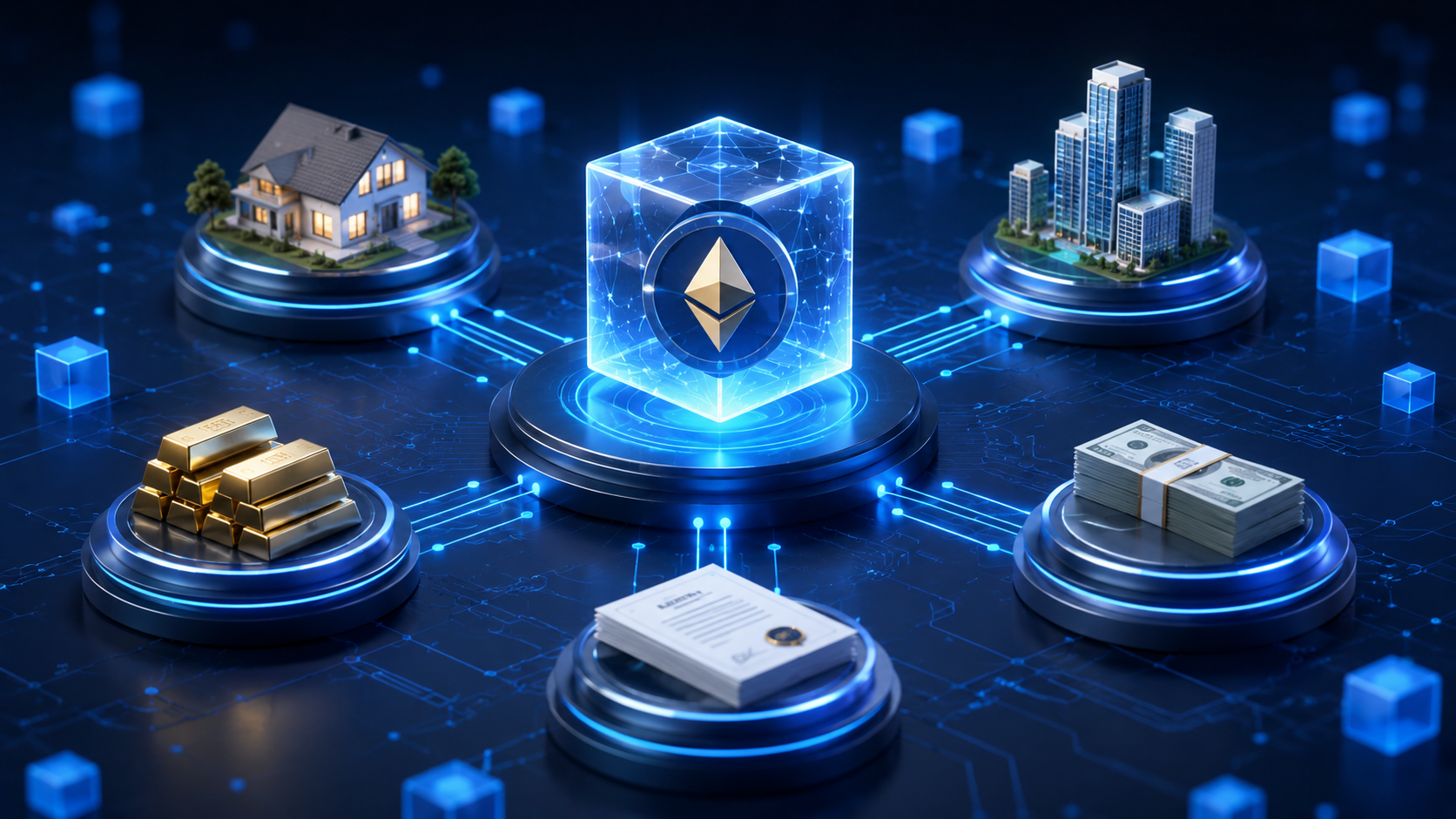
Real-World Asset Tokenization is one of the fastest-growing innovations in 2026 where blockchain is no longer limited to digital currencies. This process converts physical and financial assets into digital tokens, making them more accessible and efficient. the cryptocurrency industry is entering a new phase where blockchain is no longer limited to digital currencies. One of the fastest-growing innovations in 2026 is Real-World Asset (RWA) Tokenization—the process of converting physical and financial assets into digital tokens on a blockchain.
From real estate and government bonds to private credit and commodities, tokenization is making traditionally illiquid assets more accessible, transparent, and efficient. Financial institutions, fintech companies, and blockchain platforms are increasingly investing in this technology as regulations become clearer and institutional participation continues to grow.
This article explores how RWA tokenization works, why it matters, its benefits, challenges, emerging trends, and what businesses and investors should understand about its future.
Introduction
For many years, cryptocurrency was mainly associated with speculative trading and digital assets such as Bitcoin and Ethereum. While those assets remain important, the blockchain industry is now focusing on practical business applications.
Real-World Asset (RWA) tokenization is one of the most significant developments driving this shift.
Instead of representing only cryptocurrencies, blockchain networks can now represent ownership of real assets such as property, bonds, invoices, investment funds, and precious metals. These digital representations can improve efficiency, increase liquidity, and simplify transactions while maintaining transparent ownership records.
As governments and financial institutions continue developing regulatory frameworks, tokenized assets are becoming a major focus of the digital economy.
What Is Real-World Asset Tokenization?
Real-World Asset tokenization is the process of creating a blockchain-based digital token that represents ownership or rights related to a physical or financial asset.
Examples include:
- Commercial real estate
- Residential property
- Government bonds
- Treasury bills
- Gold and precious metals
- Private credit
- Company shares
- Carbon credits
- Fine art
- Investment funds
The blockchain records ownership while smart contracts automate transfers, settlements, and compliance requirements.
Why Real-World Asset Tokenization Is Growing in 2026
Several factors are accelerating adoption across global financial markets.
Improved regulation has made Real-World Asset Tokenization more secure for investors. For a detailed overview of changing rules, you can also read our guide on AI Regulation Updates 2025.
Institutional Adoption of Real-World Asset Tokenization
Banks, investment firms, and fintech companies are increasingly exploring blockchain infrastructure for settlements, digital securities, and asset management.
Improved Regulation for Real-World Asset Tokenization
Many jurisdictions are introducing clearer crypto regulations, particularly around stablecoins and digital assets, providing businesses with greater confidence.
Faster Transactions with Real-World Asset Tokenization
Traditional financial settlements can take several days.
Blockchain-based systems can significantly reduce settlement times while improving transparency.
Fractional Ownership Through Real-World Asset Tokenization
Tokenization allows expensive assets to be divided into smaller digital units, making investments more accessible to a broader range of participants.
Global Accessibility via Real-World Asset Tokenization
Blockchain enables digital assets to be transferred across borders more efficiently than many traditional financial systems.
Key Benefits
Better Liquidity
Previously illiquid assets can become easier to buy, sell, or transfer.
Greater Transparency
Blockchain provides a permanent transaction history that can improve auditability.
Reduced Costs
Automation through smart contracts may reduce paperwork, administrative expenses, and settlement costs.
Enhanced Security
Cryptographic verification helps secure ownership records and reduce unauthorized alterations.
Continuous Market Access
Many blockchain networks operate continuously rather than following traditional market hours.
Industries Being Transformed
Tokenization is creating opportunities across multiple sectors.
Real Estate
Investors can purchase fractional ownership in commercial or residential properties.
Banking
Financial institutions are exploring blockchain settlements and tokenized financial instruments.
Supply Chain
Digital assets can improve inventory tracking and payment efficiency.
Energy
Carbon credits and renewable energy certificates are increasingly being tokenized.
Investment Management
Fund managers can issue digital investment products with programmable features.
Risks and Challenges
Despite its potential, RWA tokenization also presents challenges.
Regulatory Uncertainty
Legal frameworks differ across countries and continue to evolve.
Cybersecurity
Blockchain applications require strong security measures to protect digital assets and private keys.
Technology Integration
Traditional financial institutions must modernize infrastructure to support tokenized assets.
Market Education
Businesses and consumers still need greater understanding of blockchain technology and digital asset management.
Sponsored Insight
Looking to Explore the Future of Digital Assets?
Organizations adopting blockchain and tokenization should prioritize security, regulatory compliance, transparency, and long-term scalability. Choosing reliable technology partners and understanding applicable laws can help reduce operational risks while supporting sustainable innovation.
Sponsored Content
Future Outlook
Industry analysts expect tokenized assets to become an increasingly important part of global finance over the next decade. Research from major financial firms points to continued growth in institutional participation, tokenized securities, stablecoin usage, and blockchain-based settlement systems.
As infrastructure improves and regulations mature, blockchain technology is expected to move beyond cryptocurrency trading into mainstream financial services.
Best Practices for Businesses
Organizations considering tokenization should:
- Understand local regulations.
- Conduct thorough legal reviews.
- Select reputable blockchain infrastructure.
- Implement strong cybersecurity practices.
- Educate employees and stakeholders.
- Maintain transparent governance.
- Monitor compliance requirements regularly.
Conclusion
Real-World Asset tokenization represents one of the most promising developments in the cryptocurrency industry. By combining blockchain technology with tangible assets, organizations can improve efficiency, transparency, and accessibility across financial markets.
Although challenges remain, growing institutional interest, clearer regulations, and advances in blockchain infrastructure suggest that tokenized assets will play an increasingly important role in the future of digital finance. Businesses that approach this technology with careful planning, compliance, and strong security practices will be better positioned to benefit from its long-term potential.
[…] Congratulations! You have now successfully setup your RTL-SDR on Windows. […]